What happens when a Team GB-level sumo wrestler swaps the dohyo for the professional wrestling ring?
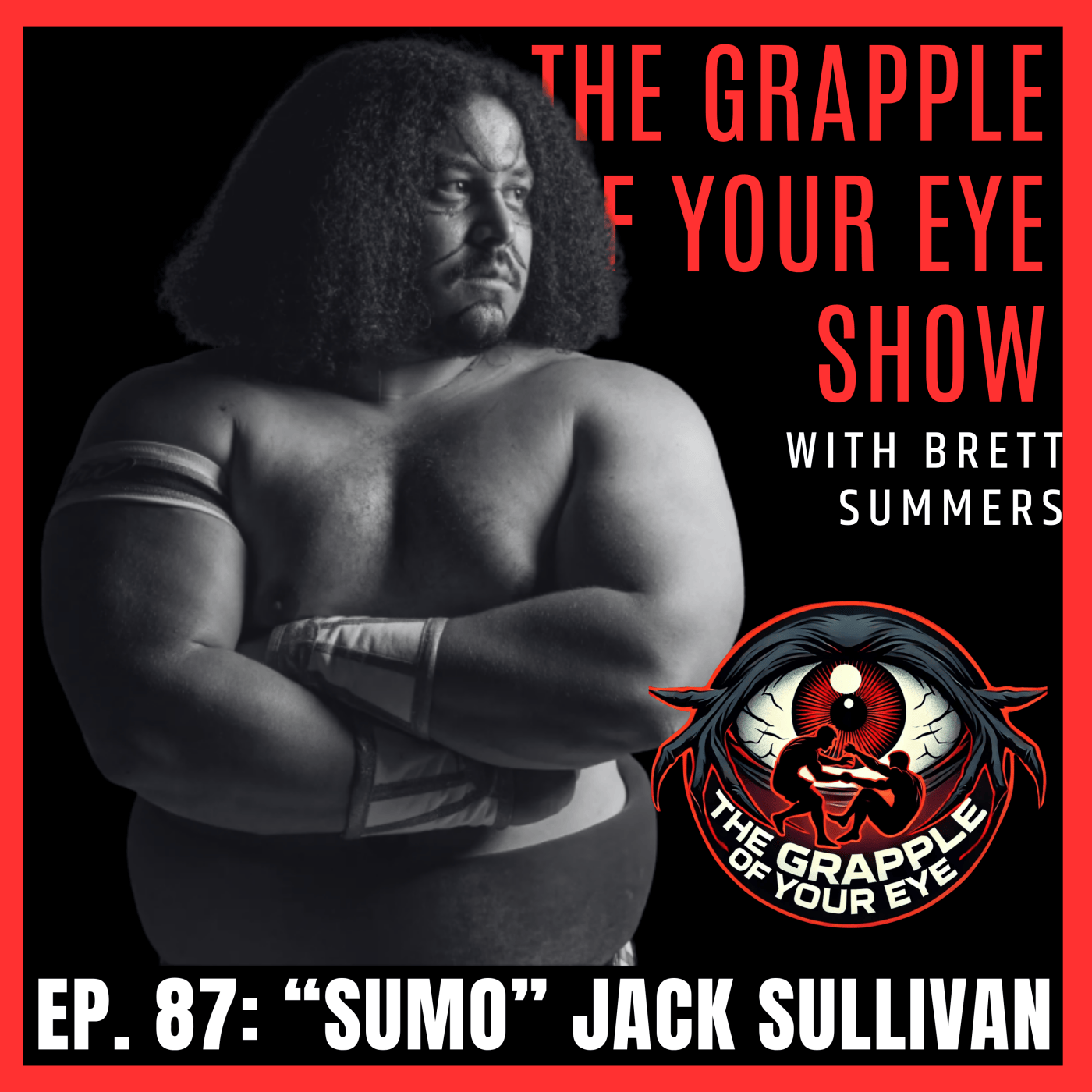
In Episode 87 of The Grapple of Your Eye Show, Brett Summers sits down with British sumo wrestler and professional wrestler “Sumo” Jack Sullivan to explore one of the most unusual journeys through the British grappling scene.
From discovering Grand Sumo in Japan and competing in British sumo wrestling to qualifying for Team GB, Sullivan appeared to have found his sport. But disappointment and disputes within British sumo eventually pushed him towards a very different form of wrestling.
His next challenge?
Professional wrestling.
Now training and competing on the UK wrestling scene, Sullivan joins us to discuss sumo, professional wrestling, the realities of learning both disciplines and his ambition to eventually step into a RevPro ring.
Discovering Sumo Wrestling in Japan
Sullivan’s journey into combat sports didn’t begin with sumo.
Growing up, he played rugby from an early age and also boxed, following a family tradition that included both his father and grandfather. Sumo entered the picture much later. During a trip to Japan, Sullivan attended a Grand Sumo tournament in Tokyo and found himself captivated by what he saw.
Rather than simply watching the enormous athletes collide and thinking it looked impossible, Sullivan had almost the opposite reaction. He wondered whether he could do it himself. Returning to Britain, he began searching for opportunities to train in sumo wrestling in the UK and discovered the British Sumo Federation.
COVID delayed his plans, but when a new sumo club eventually appeared within travelling distance, Sullivan decided it was time to find out whether his confidence was justified.
It wasn’t. At least not immediately.
Sullivan arrived expecting to be good at sumo and was quickly humbled. Rather than putting him off, that experience made him want to return.
Sumo Wrestling Is Far More Technical Than It Looks
One of the most fascinating parts of our conversation is Sullivan’s explanation of what actually happens during sumo wrestling training.
For outsiders, sumo can sometimes appear deceptively simple: two large competitors collide and attempt to push one another out of a ring.
The reality is considerably more technical.
A sumo bout can be won by forcing an opponent outside the ring or making any part of their body other than the soles of their feet touch the ground.
That creates a fascinating form of grappling built around balance, posture, explosive power, throws, pushing, thrusting and control of an opponent’s centre of gravity.
The opening tachi-ai can be crucial.
Competitors explode towards one another from the start, but behind that collision needs to be technique, positioning and a plan.
Sullivan’s background naturally influenced his own style.
Years of rugby and a relative lack of previous grappling experience led him towards the pushing and thrusting side of sumo. He could use his physicality and powerful opening attack while gradually adding more grappling techniques to his arsenal.
Do You Have to Be Huge to Compete in Sumo?
Another major misconception Sullivan addresses is the idea that you have to be enormous to become a sumo wrestler.
While Japanese Grand Sumo famously does not operate traditional weight divisions, international amateur sumo does.
That makes the sport considerably more accessible than many people realise.
International competition includes different weight categories alongside the spectacular openweight division, where competitors of vastly different sizes can meet.
That can produce some remarkable encounters.
Smaller, more technical wrestlers can topple much larger opponents.
Alternatively, the giant can launch the smaller wrestler across the ring.
That unpredictability is part of what makes openweight sumo such an exciting spectacle.
Sullivan also discusses women’s sumo wrestling and the efforts being made to encourage more female competitors into the sport.
For anyone coming from Judo, BJJ, wrestling, Sambo or another grappling discipline, sumo presents an intriguing opportunity to test familiar skills under a completely different ruleset.
The Growth of British Sumo Wrestling
When Sullivan began training, the British sumo scene was extremely small.
However, he witnessed considerable growth as new clubs began appearing and competitors gained more opportunities to train against one another.
Inter-club competitions helped build experience, while appearances at events such as Comic Cons introduced sumo to audiences already interested in Japanese culture.
The British Sumo Championships provided another crucial step.
Successful competitors could potentially progress towards representing Team GB in international sumo competition.
For Sullivan, that possibility transformed his approach to the sport.
After competing while still relatively inexperienced and being comprehensively beaten, he gave himself a simple objective:
Come back better.
Qualifying for Team GB Sumo
Sullivan spent the following year developing himself physically and technically before returning to competition.
Although he finished second in his light-heavyweight category, another opportunity remained.
Openweight sumo.
With no weight restriction, the division offered exactly the kind of unpredictable clash of styles Sullivan loved.
He fought his way through the tournament and finished second.
That performance earned him qualification for the Team GB tournament squad at the World Championships.
For an athlete who had initially stumbled into sumo almost through curiosity, representing Britain was suddenly within touching distance.
Unfortunately, Sullivan would never get the opportunity to actually compete at those World Championships.
With international amateur sumo largely self-funded, existing travel commitments meant he could not afford to make the journey to Poland.
It was a devastating disappointment. But further problems were coming.
Politics and Controversy in British Sumo
One of the more revealing sections of Episode 87 explores Sullivan’s perspective on the politics that developed within British sumo.
Sullivan discusses the emergence of competing organisations within an already niche sport and the disputes surrounding recognition at European and international level. He explains how these issues ultimately affected competitors and their opportunities to represent their country.
For Sullivan, the situation was particularly frustrating. He still loved sumo. He could continue training. He could enter certain competitions but the pathway towards the European and World Championships that had once motivated him had changed.
Sullivan also discusses the controversial scenes surrounding a recent European Championship event held in Britain and why he believes the problems became increasingly difficult for the wider sumo community to ignore.
Importantly, Sullivan stresses that these experiences should not discourage people from trying sumo wrestling. His experiences with the majority of coaches, clubs and competitors have been overwhelmingly positive. Eventually, however, Sullivan began considering another question. If his competitive ambitions in sumo had stalled…
What else could he do?
From Sumo Wrestling to Professional Wrestling
The answer came at London’s Copper Box Arena. Sullivan attended a RevPro Wrestling show and was introduced to a world of professional wrestling beyond the WWE product he had watched growing up.
Seeing British independent wrestling live planted an idea in his head. He was already a physical athlete. He had boxed. He had played rugby. He had competed in sumo. So how difficult could professional wrestling really be? As generations of aspiring wrestlers have discovered… very difficult.
Sullivan began training at the Portsmouth School of Wrestling, where he found himself having to learn an entirely new discipline.
How Does Pro Wrestling Training Compare to Sumo?
There were obviously transferable qualities. Sullivan was already accustomed to physical contact, explosive movement and being hit by people significantly larger than himself. That helped when it came to taking his first wrestling bumps. But professional wrestling presented a very different challenge. One of the biggest? Cardio.
Despite his sporting background, Sullivan describes professional wrestling conditioning as a completely different beast. The experience also challenged some of his preconceptions about the wrestling business. Having heard countless stories about strict wrestling hierarchies and intimidating locker rooms, Sullivan admits he was nervous about entering the industry. Instead, he found coaches and wrestlers who were welcoming, supportive and willing to help him improve…
Sumo Jack Returns to the Dohyo
Professional wrestling hasn’t completely replaced sumo. After spending considerable time away from dedicated sumo training, Sullivan has been tempted back into competition. He was invited to participate in an upcoming invitational sumo tournament and, despite knowing that many of his potential opponents have continued training while he has concentrated on professional wrestling, he accepted.
Why?
Because he still loves sumo and he still wants people to discover it. Sullivan hopes that putting sumo in front of new audiences can help demonstrate that the sport is far more accessible, technical and entertaining than many outsiders realise.
Why Grapplers Should Try Sumo Wrestling
Perhaps the biggest message from our conversation with Sumo Jack Sullivan is simple: Try SUMO!
You don’t have to look like a stereotypical sumo wrestler. You don’t have to weigh hundreds of pounds. And you don’t necessarily need years of previous grappling experience.
Modern international sumo offers weight categories, opportunities for men and women, and a fascinating ruleset based around explosive power, balance, timing, throws and positional control.
For practitioners of BJJ, Judo, Sambo, Catch Wrestling, freestyle wrestling, MMA and other grappling sports, it offers the opportunity to explore familiar concepts in an entirely different environment.
And for Sullivan?
His own grappling journey is far from finished.
From rugby and boxing to British sumo, Team GB qualification and now professional wrestling, Sumo Jack Sullivan has already experienced several very different corners of the combat sports world.
Now he’s attempting to bring those experiences together as he builds his professional wrestling career while keeping one foot firmly planted in the sumo ring where you can buy tickets to see him in action on August 22nd 2026 HERE.
Would you rather spend a year training SUMO or PROFESSIONAL WRESTLING?
Let us know in the comments.
And if you already train BJJ, Judo, Sambo, MMA, Catch Wrestling or another form of grappling, we’d love to know how you think your skills would translate to the sumo ring.
The Grapple of Your Eye Show — Explore The Grappling Multiverse.


Leave a comment